New Custom Code in CANVAYO

… and suddenly ideas take flight.

That brilliant idea from the meeting? It goes live faster than anyone at the table can ask “Do we have budget for that?” CANVAYO delivers every module for a strong website. But sometimes you’re gripped by that one thought that won’t fall in line. With Vibe Coding you simply dock it on, as if it had always belonged.

A boy with a skateboard whispers an idea to a robot, the robot builds it on screen, and finished machines appear on the conveyor belt next to it

Pilot programme 5 spots

We’ll build the best suggestions for you!

We’re planning a pilot programme with 5 customers who want to test the new Custom Code. Tell us what you’d love to have on your website.

  • The best ideas get a spot
  • Free first build by us
  • Your favourite feature comes to life

Loading form …

  • Build it yourself after onboarding
  • Develop it together with AI
  • We handle the complex stuff
  • With checks for privacy, performance, accessibility
Intro

Who’s vibing along?

Content

Discover our first examples of formats built with Vibe Coding – from a numbers game in a counter to a Scrollytelling feature that takes you on an interactive mountain hut tour. Inspiration for new formats. Just submit your own ideas and we’ll get back to you.

By the way, the header above with its form is itself a Custom Code block that we whispered to our agent.

Numbers game

Small, cool idea, big impact: a counter that counts up as soon as it comes into view. The numbers are entirely made up. We don’t need AI to hallucinate. Great for measurable milestones, the number of successful projects, your years in business, CO₂ saved and more. Can also be built as a countdown. What comes to mind for you?

  • 1.200

    hours of coding course saved

  • 347

    spontaneous ideas, no ticket needed

  • 92%

    fewer “Got a sec?” requests for IT

  • 18.640

    lines of code from non-developers

  • 1

    Moon landing, just for fun

3, 2, 1 … This is Vibe Coding!

Looks like a normal text block, just with video. And in principle that’s what it is – except it wasn’t made in the standard backend but freely with Vibe Coding.

The clip captures the spirit behind it: Georges Méliès’ silent-film milestone “A Trip to the Moon” (1902) is regarded as the first science fiction film in cinema history and featured elaborate special effects. A symbol of ideas at the cutting edge of technology. The cannon shot, the flight to the moon and the iconic landing in its eye are all original. The countdown, the neon look and the CANVAYO capsule we worked in with AI. What would Méliès have done with Vibe Coding?

How it works: You name your wish, describe what you want to see in a dialogue with AI and refine the draft. The AI writes the code. You get a prototype to test. Once approved, the code goes straight onto the website via an interface. Nothing breaks along the way. During the pilot phase we take on this part for existing customers – so you prompt us. In return we’re refining a so-called skill for AI agents that trained CANVAYO users will later be able to use themselves. It knows the technical guardrails and looks after security and stability.

Is something moving?

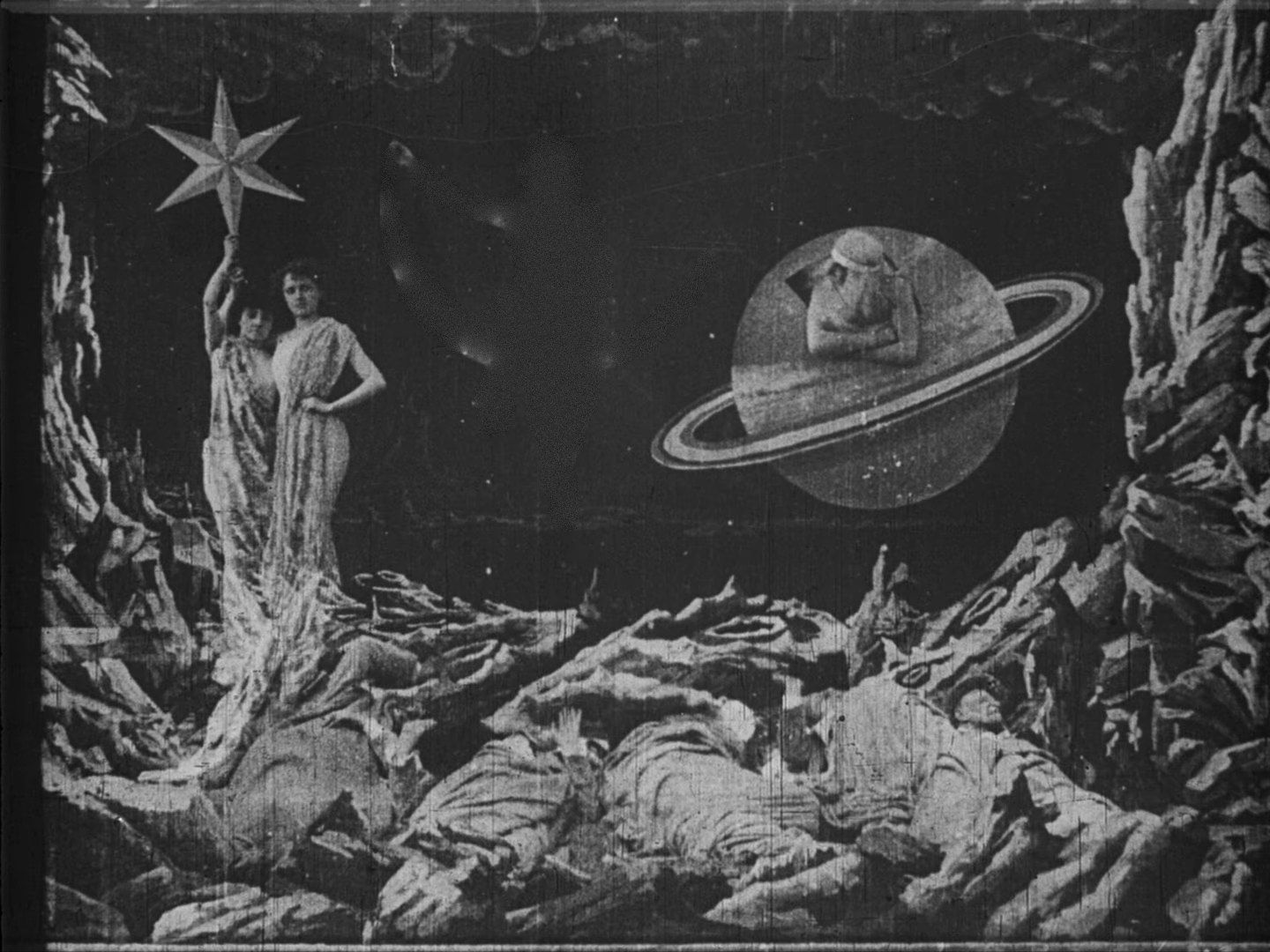
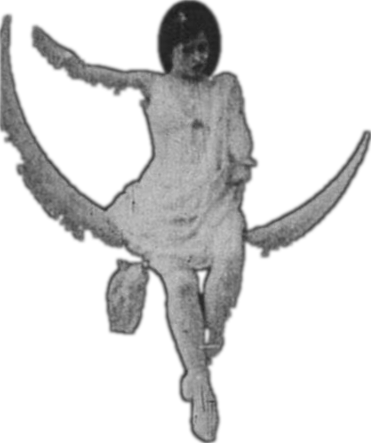
Scene from Georges Méliès’ “A Trip to the Moon”: above the sleeping explorers, Phoebe sits on the crescent moon, beside her Saturn and a woman holding a star.
Georges Méliès, “Le Voyage dans la Lune” (1902), public domain · Motion: Custom Code

A change of scene on Méliès’ moon: at first glance the set looks frozen. Until Phoebe gently sways on her crescent moon, a streak of light travels around Saturn’s ring and a star flashes. No heavy video eating up bandwidth – just a single still image brought to life in places by a few lines of code.

A cinemagraph catches the eye without getting in the way of reading: quiet, subtle, endless. Use it when a page needs atmosphere but a sluggish video player shouldn’t slow down the reading flow. You choose the detail, AI sets it in motion, and CANVAYO embeds the element in the layout, light as a feather.

Before-and-after effects

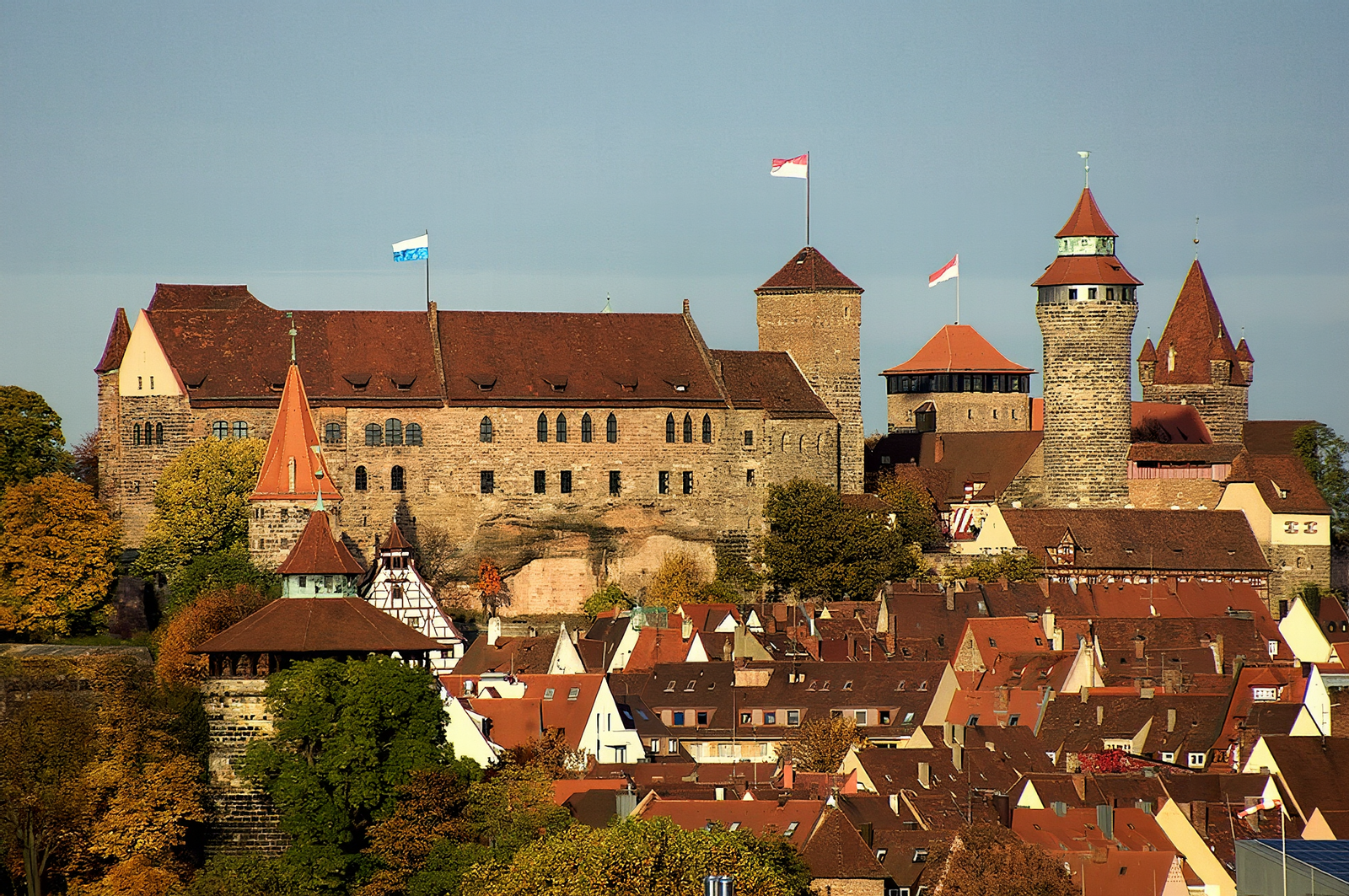
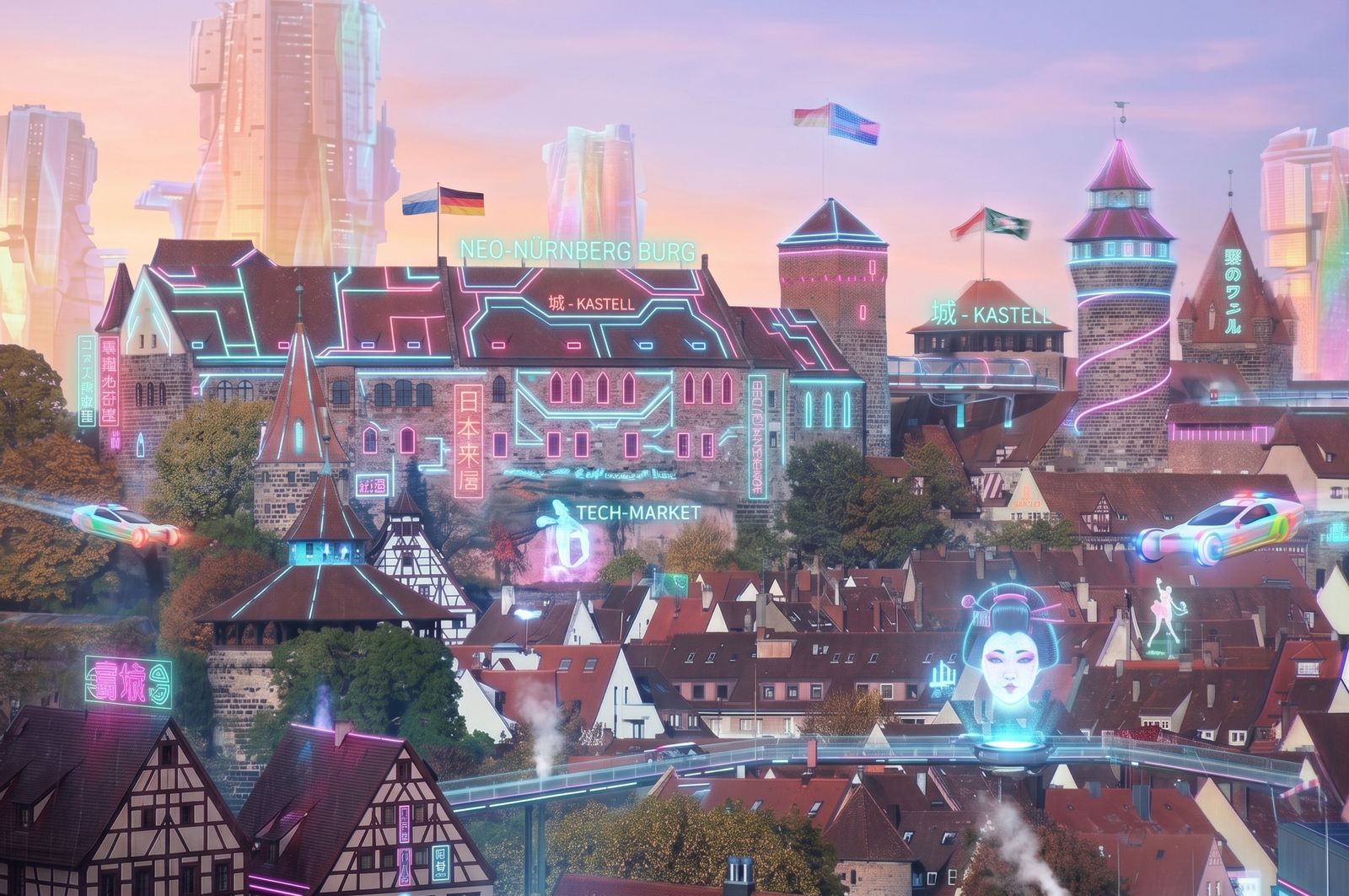
Two images sit on top of each other. You drag the fine line between them with the mouse, swipe it aside with your finger or move it with the arrow keys. No duplicate galleries, no long searching: a single move makes the change visible instantly.

Before-and-after effects are perfect wherever the difference tells the story – for example when you’ve renovated rooms, relaunched websites or are comparing products.

Before: short description of the starting point
After: short description of the result
Before on the left, after on the right.

Welcome to the Jungle

A jaguar prowls across the forest floor, a toucan flies through the mist, and up in the canopy an anaconda, a sloth and a hummingbird wait as paper silhouettes – why not? Dividers structure landing pages and give the eye a rest. Usually a plain line or a simple image does the job. With Vibe Coding you rethink this standard element completely.

The system draws every detail itself and downloads nothing. You don’t need an image file, and no third-party server learns anything about your visitors. The code generates the entire animation. Pause the scene and you’ll see it still – and still complete.

As if you were there: up the mountain

Scrollytelling is the format for stories you have to experience. In this case: six days on foot from Oberstdorf to Merano – and you “hike” along digitally. You can almost feel the summit wind in your hair, the swaying suspension bridge under your feet. No joke. The map shows where you are right now; images, facts and voices change with every stage.

No sluggish video that has to buffer first. No external map app that collects data and wrecks your layout. Use the format when a photo gallery falls flat and you want to take your visitors step by step through complex tours, building projects or stories. Text, video and sound weave seamlessly into digital experiences.

A reportage in seven stops

Across the Alps

Six days on foot from Oberstdorf to Merano – across three mountain ranges, two borders and on to a find that waited 5,300 years in the ice.

About 15 minutes · opens full screen · best with headphones

  1. Oberstdorf
  2. Kemptner Hütte
  3. Holzgau suspension bridge
  4. Memminger Hütte
  5. Braunschweiger Hütte
  6. Tisenjoch
  7. Merano

A reportage in seven stops

Across the Alps

Six days on foot from Oberstdorf to Merano

Six days. Around ninety-six kilometres on foot. Six thousand seven hundred metres of ascent. The E5 runs from Oberstdorf in the Allgäu across three mountain ranges all the way to Merano. Walk it and you see the Alps in fast-forward: cowbells and glaciers, dormitory bunks and palm trees. And, just before the end, a place where someone waited for five thousand three hundred years. Put on your headphones. We’re setting off.

Scroll to set off

The route96 kmon foot, plus a cable car and three buses

Uphill6,709 metres of ascent. Downhill 5,839.

BordersGermany, Austria, Italy. The line on the map is real: calculated from OpenStreetMap paths.

StartOberstdorf in the Allgäu, 813 metres above sea level.

Green meadows in the Trettach valley, mountains with wisps of cloud behind.
Panorama of the Allgäu Alps with the Nebelhorn and Schattenberg above Oberstdorf.
The houses of Spielmannsau beneath wooded slopes in the mist.
  • Stop 1 of 7
  • Day 1
  • 813 m

Oberstdorf

The first step

It’s just after seven. Mist still hangs over the Trettach valley, and the cowbells in the meadows are louder than any car.

Oberstdorf is Germany’s southernmost municipality. Yet for most people shouldering their rucksacks here, it’s only the beginning.

Behind these peaks lies Austria. Beyond that the Lech valley, the Inn valley, the Pitztal, the Ötztal. And somewhere far beyond, six days’ walk away, Italy.

Spielmannsau 1 ¼ hrsKemptner Hütte 4 ½ hrsE5 · long-distance trail

Merano 6 daysvia Holzgau · Zams · Vent

Spielmannsau, a good thousand metres up: a few farms, a chapel, an inn. This is where the road ends. From here on there’s only the path.

Painting: a stag by a pool, with fir trees, mist and mountain peaks behind.
This is how Ludwig Skell painted the upper Spielmannsau. Deer, mist, firs – not much has changed. There are just more hikers now.Ludwig Skell, “Hochwild in der hinteren Spielmannsau”

Trettach valleyTwo almost flat hours along the river. Your legs don’t yet know what’s coming.

SperrbachtobelSteel cables, old snow until July, the stream thundering beneath the snow bridge. This is where it first gets serious.

The Kemptner Hütte in a green cirque, half hidden by mist.
The Kemptner Hütte in sunshine, with window boxes and hikers in front.
Panorama: the hut small on the slope, jagged peaks behind.
Starry sky with the Milky Way above a mountain ridge.
  • Stop 2 of 7
  • Day 1
  • 1,846 m

Kemptner Hütte

The first night

The hut only emerges from the mist at the very last moment. Built in 1891, today one of the largest huts in the Allgäu Alps – and still fully booked every night in summer.

Outside, socks are drying on the railing. Inside it smells of wood stove, wet loden and Kaiserschmarrn.

Enamel sign on a wooden wall: Kemptner Hütte, built 1891, altitude 1846 metres.
Altitude 1846 m. The sign has seen generations of hikers. The number has stayed the same.

Lights out at ten. That goes for everyone. If you’re up at five to cross the Mädelejoch, you need your sleep. Every summer I see thousands of rucksacks come through this door. The first evening, people arrive tired. By the second, they’re already a bit proud. And I’m not giving away the Kaiserschmarrn recipe. Not even to my sister.

From the hut book

Knee says no, head says yes. Onwards tomorrow! – Jana & Tom, Cologne

Third time here. The Schmarrn is still the best. – Heinz, 71

Fog, fog, fog. Then: stars. – Mira

Who’s got my head torch? – Dorm 4, bunk 12

At ten it goes quiet. Step outside once more and you’ll see more stars in one night than in a year in the city.

Mädelejoch · 1,973 mA sign, a boundary stone, a gust of wind. And suddenly you’re in Austria.

Höhenbach valleyDown through dwarf pines and larches. Somewhere ahead, water is rushing.

A long suspension bridge spans high above a wooded valley.
View along the narrow steel grating of the bridge, steel cables left and right, forest ahead.
The bridge seen from below, a thin line between the treetops against the sky.
  • Stop 3 of 7
  • Day 2
  • 1,200 m

Holzgau suspension bridge

200 metres of nerve

Suddenly a band of steel stretches across the gorge. 200 metres long, 110 metres above the Höhenbach. You don’t have to cross it to reach Holzgau. Almost everyone does anyway.

Beneath the bridge the water plunges into the depths. You can still hear it in the middle of the walkway when the wind drops for a moment.

Two hundred metres long, a hundred and ten metres above the ground. The Holzgau suspension bridge sways when the wind sweeps through the Höhenbach valley. Don’t look down, everyone says. Everyone looks down.

The grating is as wide as two shoulders. Through the mesh you see the treetops. Every step gives a little bounce.

Only from below do you see what you were just standing on: a line in the sky.

Holzgau · 1,114 mPainted houses, a fountain, the last shop for two days.

Madau valleyMany take a taxi here. We don’t.

The climbA good thousand metres of ascent in the afternoon sun. At the top, a limestone bowl with three lakes awaits.

The Memminger Hütte on a ledge in front of rugged limestone peaks.
A turquoise mountain lake in a bowl of pale limestone.
Two climbers scrambling up between rock spires towards the Seescharte.
  • Stop 4 of 7
  • Day 2
  • 2,242 m

Memminger Hütte

Kingdom of the ibex

The Memminger Hütte stands on a ledge as if someone had put it down there and forgotten it. All around: limestone, cirque lakes, silence. And alpine choughs that know exactly when someone unpacks their snack.

At six in the morning the peaks are mirrored in the Seewi lakes. The water is so cold that nobody spends long wondering whether to jump in.

Next morning, the Seescharte: 2,599 metres, the highest point of the day. The last few metres you climb with your hands.

The Seescharte is the moment many people realise: the E5 is no stroll. Two thousand six hundred metres, loose scree, and at the end a few holds on the steel cable. And on the other side it’s almost two thousand metres down to Zams. When you stand at the top and an ibex looks at you as if you were the stranger here, it’s right.

Seescharte · 2,599 mA quick breather at the top. Below lies the Inn valley, 1,800 metres down.

Descent to Zams1,800 metres of descent in one go. Your knees will remember it for a week.

VenetBy cable car over the Inn valley. From above, Zams looks like a model railway.

PitztalAn hour on the bus, one bend after another, until the road simply ends.

Mittelberg · 1,736 mUp ahead, the ice is already gleaming.

The stone-built Braunschweiger Hütte, right above a crevassed glacier.
The Mittelbergferner: a broad glacier between dark peaks under a blue sky.
View from the Pitztaler Jöchl over snowfields, scree and a path.
  • Stop 5 of 7
  • Day 4
  • 2,759 m

Braunschweiger Hütte

The ice is retreating

The Braunschweiger Hütte clings above the Mittelbergferner like an eagle’s eyrie. From the terrace you can see what’s still there. And if you look closely, what’s missing.

The glacier’s tongue

Between 1850 and today, the glacier tongue in this simplified view has lost almost half its length.

Simplified view with demo values – dashed: extent around 1850.
Drawing from around 1900: rocks, a glacial lake, glaciated peaks above.
Drawn around 1900: ice almost up to the hut.Michael Zeno Diemer
Old illustration: people with a cross and banners standing in prayer on a glacier.
In the past, valley dwellers marched onto the ice with a cross and banners and prayed for it to stop.Illustration: Hans Beat Wieland
From space it looks the same everywhere. Satellite images of the Aletsch Glacier in Switzerland, year after year.Copernicus Sentinel · Sentinel Hub

When the Braunschweiger Hütte was built, the ice reached almost to its walls. Today we climb a little further down every year just to find the glacier tongue at all. People here once held processions so that the ice would stop advancing. Today we’d be glad if it did that again.

Next morning over the Pitztaler Jöchl, 2,996 metres: the highest point of the classic E5. Then down through the ski area, where in summer tarpaulins cover the last snowfields.

Pitztaler Jöchl · 2,996 mHighest point of the classic E5. Snow in August.

Sölden and VentTwo buses, one valley. Vent is Austria’s last village before the ice.

The stone-built Martin-Busch-Hütte on a green terrace of the slope.
Martin-Busch-Hütte · 2,501 mThis is where the story begins that everyone has heard of.

The weather turnsWithin a quarter of an hour the sky turns grey. Then white.

The Similaunhütte at the edge of a glacier beneath dark peaks.
A glacial valley of ice and grey scree, snowfields above.
A tall stone pyramid on a ridge, the monument at the site of the find.
  • Stop 6 of 7
  • Day 6
  • 3,210 m

Tisenjoch

The man from the ice

The Similaunhütte, 3,019 metres. Sleet rattles against the windows. Anyone still outside now takes cover behind every boulder.

Half an hour north-west, at the Tisenjoch, lies an inconspicuous hollow in the rock. No sign, no fence. Just a cairn nearby.

19 September 19911.30 pm

On the nineteenth of September nineteen ninety-one, a couple from Nuremberg are descending from the Tisenjoch. In a hollow in the rock, something brown is sticking out of the meltwater. They take it for a mountaineer who has had an accident. Only days later does it become clear: this man died around five thousand three hundred years ago. An arrow had struck him in the shoulder. His last meal was ibex meat. He carried an axe with a copper blade, a yew-wood bow and sixty-one tattoos. The ice held him for five millennia. Then it let him go.

Back in time
  1. 1991A couple from Nuremberg discover the dead man in the ice.
  2. 1786Goethe crosses the Brenner on his way to Italy.
  3. 1492Columbus lands in America.
  4. 800Charlemagne is crowned emperor.
  5. AD 1The Romans build their roads across the Alps.
  6. 753 BCAccording to legend, Rome is founded.
  7. 1332 BCTutankhamun becomes pharaoh.
  8. 2560 BCThe Pyramid of Khufu is completed. By then Ötzi has been dead for 700 years.
  9. 3000 BCIn England, the first ditches of Stonehenge are dug.
  10. c. 3300 BCA man dies at the Tisenjoch. The ice closes over him.
Reconstruction: the weathered face of a man with a beard and long hair, gazing solemnly into the distance.
This is how he might have looked: about 46 years old, 1.60 metres tall, brown eyes. The reconstruction is in the South Tyrol Museum of Archaeology in Bolzano.
  • AxeBlade of almost pure copper, haft of yew. A status symbol.
  • Bow1.82 metres, yew wood – unfinished, still unstrung.
  • QuiverWith 14 arrows, only two of them ready to shoot.
  • ShoesBearskin soles, deerskin uppers, hay inside against the cold.

Today a stone pyramid marks the site. The border runs only around 90 metres away – one reason why the man from the ice lies in Bolzano today and not in Innsbruck.

Descent into the Schnalstal1,500 metres down: from the ice over scree to the first larches.

The turquoise Vernagt reservoir between green slopes.
VernagtThe reservoir glows turquoise. Beneath the water lie farms that were flooded in 1956.

VinschgauBy bus down the valley. Apple trees as far as the eye can see.

View through trees of Merano’s old town with its pointed church spire against the mountains.
Colourful flower beds on the Passer Promenade, strollers and grand hotels behind.
Panorama over Merano and the Adige valley to the mountains.
  • Stop 7 of 7
  • Day 6
  • 325 m

Merano

Palm trees

From the bus window: palms, cypresses, vineyards. Six days ago mist hung over the Trettach valley. Today it’s 27 degrees.

On the Passer Promenade the flower beds are still blooming in September. The heavy boots stand out here. Nobody minds.

Black-and-white photo: a promenade with palms and cypresses, snow-covered mountains behind.
The Tappeiner Promenade, mid-20th century. Spa guests came for the mild climate even then. Hikers with rucksacks, not so much.Photo: Willy Pragher, Landesarchiv Baden-Württemberg

Merano. Three hundred metres above sea level. Six days ago, the Allgäu still lay ahead of us. In between: scree, snow, two borders, three glaciers and a man from the Copper Age. The palms on the Passer Promenade feel like a reward. Maybe that’s exactly what they are.

  • 6days
  • 96kilometres on foot
  • 6,709metres of ascent
  • 5,839metres of descent
  • 3,210metres, highest point
  • 2borders

Made itOberstdorf – Meranoon foot, by cable car and bus, across three mountain ranges

Credits

A demonstration for the HTML block. Route, elevations, peaks, glaciers and borders come from open data and were calculated once, at build time – the page doesn’t query any third-party service. The hut warden, mountain guide, glaciologist and the hut-book entries are invented; all voices are AI-generated (Gemini 3.1 Flash TTS).

Photos and graphics

    Videos

    Ambient sound

    Voices

    • AI voice “Aoede” · Gemini 3.1 Flash TTS · Google · Text: demo editorial team (fictional) · demo only
    • AI voice “Gacrux” · Gemini 3.1 Flash TTS · Google · Text: demo editorial team (fictional) · demo only
    • AI voice “Kore” · Gemini 3.1 Flash TTS · Google · Text: demo editorial team (fictional) · demo only
    • AI voice “Vindemiatrix” · Gemini 3.1 Flash TTS · Google · Text: demo editorial team (fictional) · demo only

    Data

    • Paths, peaks, glaciers, lakes, rivers, borders: © OpenStreetMap contributors · ODbL
    • Elevation: EU-DEM 25 m, Copernicus Land Monitoring Service, queried via OpenTopoData
    • Photos, videos and sounds: Wikimedia Commons, licences as stated

    The table that shows more

    Grasp the numbers instead of counting columns: Vibe Coding turns a dry data sheet into an exciting, interactive overview.

    15 meteorites invite you to explore – from Hoba, the 60-tonne iron giant in Namibia, to a 24-gram fragment from Flensburg. With search and filters by type, period and origin, sortable by mass, and a size comparison that makes sense at a glance.

    Ideal for product data, references or locations. Wherever long lists would otherwise put people off, Vibe Coding builds you a view that draws them in. Take a look at the details ...

    Observed?

    meteorites. The column headers sort the table; a name opens the details.

    Data: NASA Open Data, “Meteorite Landings” (The Meteoritical Society, as of 2013), supplemented for Stubenberg and Flensburg from the German Wikipedia. Sizes are calculated as spheres, with 7.8 g/cm³ for iron, 4.8 for stony-iron and 3.4 for stony. Photos: Wikimedia Commons, author and licence given with each image.

    What will you build next?

    Intro

    Build it yourself after a short onboarding, develop it together with AI or let us handle the complex stuff. Tell us what you’re planning.


    Intro

    Build it yourself after a short onboarding, develop it together with AI or let us handle the complex stuff. Tell us what you’re planning.
    Top